
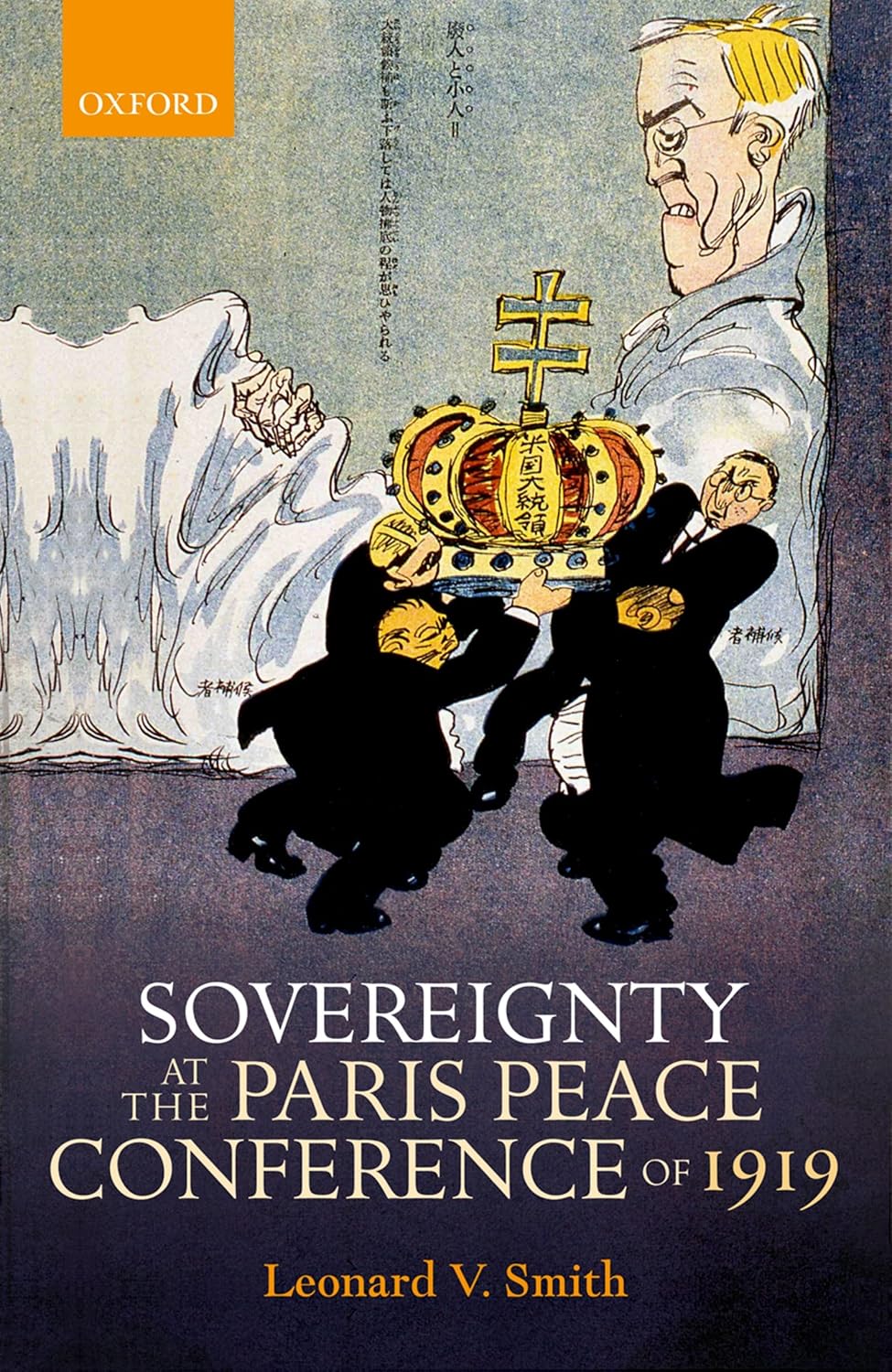
Sovereignty at the Paris Peace Conference of 1919 (The Greater War)
Product details
| Management number | 233439978 | Release Date | 2026/06/27 | List Price | US$12.83 | Model Number | 233439978 | ||
|---|---|---|---|---|---|---|---|---|---|
| Category | |||||||||
We have known for many decades that the Paris Peace Conference of 1919 "failed", in the sense that it did not prevent the outbreak of World War II. This book investigates not whether the Paris Peace Conference succeeded or failed, but the historically specific international system it created. It explores the rules under which that system operated, and the kinds of states and empires that inhabited it. Deepening the dialogue between history and international relations theory makes it possible to think about sovereignty at the Paris Peace Conference in new ways. Sovereignty in 1919 was about not just determining of answers demarcating the international system, but also the questions. Sovereignty in 1919 was about remaking the world.Most histories of the Paris Peace Conference stop with the signing of the Treaty of Versailles with Germany on 28 June 1919. Sovereignty at the Paris Peace Conference of 1919 considers all five treaties produced by the conference as well as the Treaty of Lausanne with Turkey in 1923. It is organized not chronologically or geographically, but according to specific problems of sovereignty. A peace based on "justice" produced a criminalized Great Power in Germany, and a template problematically applied in the other treaties. The conference sought to unmix lands and peoples in the defeated multinational empires by drawing boundaries and defining ethnicities. The conference sought not so much to oppose revolution as to instrumentalize it in the new international system. The League of Nations, so often taken as the supreme symbol of the failure of the conference, is better considered as a continuation of the laboratory of sovereignty established in Paris. Read more
| ASIN | B07BB1PBFV |
|---|---|
| XRay | Not Enabled |
| ISBN13 | 978-0192540843 |
| Edition | Illustrated |
| Language | English |
| File size | 3.6 MB |
| Page Flip | Enabled |
| Publisher | OUP Oxford |
| Word Wise | Enabled |
| Print length | 299 pages |
| Accessibility | Learn more |
| Screen Reader | Supported |
| Part of series | The Greater War |
| Publication date | March 9, 2018 |
| Enhanced typesetting | Enabled |
Bestseller ranking
Headers




Customers who viewed this product also viewed
World War I


Correction of product information
If you notice any omissions or errors in the product information on this page, please use the correction request form below.
Correction Request Form